Beyond RehabFunctional medicine foundations for rehab providers
When good rehab isn't enough, learn where else to look.
Six weeks diving deep into the systems that decide whether your patient can actually heal: metabolic health, inflammation, nutrient status, gut health, sleep and stress. Including how to read the bloodwork they are already carrying around but with an optimal instead of normal lens.
- 6
- Live weeks
- 20
- Seats
- $497
- Rate
- January 12
- Cohort starts
Enroll now Starts January 12. For licensed rehab providers.

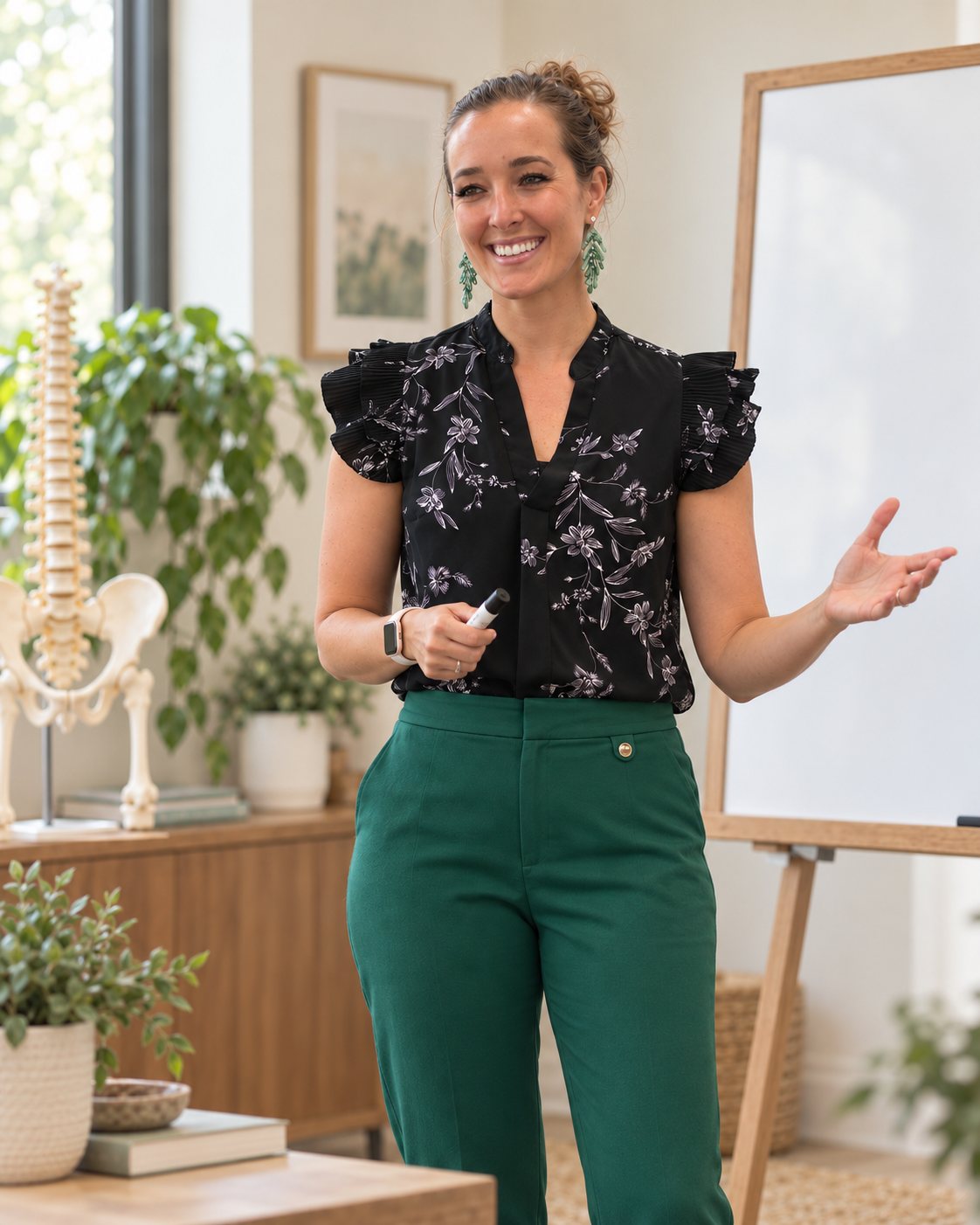
Taught byDr. Bri Thornton, PT, DPT, PRFS, CFMPA DPT and Certified Functional Medicine Practitioner, still treating patients this way every week.
You have already met this patient44 F · 5 mo post-ACLR
Forty-four years old and five months out from an ACL reconstruction.
What you chartedAll good
- Range of motion excellent
- Graft stable
- Home program adherence the kind you wish every patient had
- Program adjusted twice
And yet her quad strength is nowhere near where it should be, and nothing seems to be changing.
What nobody chartedNever asked
- Sleeps about five hours
- Skips meals
- Heavy periods
- Bloated and severely constipated for months, and stopped mentioning it because nobody seemed interested
Ferritin 16
Vitamin D 22
Neither flagged. Neither abnormal.
None of that is a knee problem, but all of it impacts her progress
A perfectly designed exercise program still requires the biologic resources to adapt to the stimulus.
A whole category of patients you already have
- The one who plateaus at seventy percent whose hormones may be impacting her progress.
- The one whose fatigue does not match the load you prescribed.
- The one who recovers, re-injures, recovers, re-injures, and you keep going back to mechanics because that is what you know.
Before you change her exercises for the third time: what else could be influencing this patient's ability to recover?
We are the experts on the musculoskeletal system but that does not mean the musculoskeletal system is the only place to look.
Six weeks of learning where to look, what to ask, what the answers mean, and what you are allowed to do about it.
Nobody taught you this
Normal versus optimal was not in your curriculum.
Blood chemistry interpretation with normal vs optimal ranges were not in your DPT curriculum. It was not on your board exam and you most likely have not come across it in your continuing education.
There was never a time in your education where anyone expected you to know that a ferritin level of 16 can impact rehabilitation due to suboptimal levels impacting oxygen delivery and energy metabolism.
You also were never taught that inflammation can falsely elevate ferritin to the point where you might not be able to trust that number.
Not knowing this information is not a gap in just you, it is a gap in how we were all trained.
Becoming a better rehab provider does not always mean learning another manual technique or another exercise progression. Sometimes it means learning to zoom out and look at other systems that you may have underestimated.
Lab reference rangeOptimalHers
| Ferritin | 16 | 0–150 ng/mLOptimal 50–100 |
|---|---|---|
| Vitamin D | 22 | 0–100 ng/mLOptimal 50–80 |
| Vitamin B12 | 310 | 230–1250 pg/mLOptimal 600–800 |
| Fasting insulin | 18 | 2–25 µIU/mLOptimal 2–5 |
Week two teaches you to read this panel the way I read it, and to recognize when a value is normal but not optimal for the person in front of you.
The framework
Here is the order I work in.
- 01
Move Better.
- Exercise
- Strength
- Mobility
Exercise, strength, mobility. You already own this one.
- 02
Fuel Better.
- Nutrition
- Hydration
Nutrition and hydration. Whether the body has the raw materials to build what you are asking it to build and repair what must be healed.
- 03
Recover Better.
- Sleep
- Stress
- Toxin load
Sleep, stress management, minimizing toxin exposure, and reducing oxidative stress. We cannot expect the body to recover appropriately if it does not have the environment to do so.
- 04
Think Bigger.
- Systems biology
- Root cause
- Referrals
Systems biology, root-cause thinking, collaboration, and appropriate referrals. The framework makes sense and it may seem easy but the hard part is often how to integrate it into clinical practice. We don’t just teach the concepts and instead over these next six weeks we will teach the concepts and help you understand how to integrate it clinically.
Four pillars. One system.Enroll now
The six weeks
One session a week. Teaching, then live discussion.
Live and virtual, on Tuesdays at 7:00 PM Eastern. One 90 to 120 minute session a week, teaching plus live Q&A and clinical discussion. Every session is recorded, so if you miss one you can watch it back later.
Week 01
Functional Medicine Foundations
What functional medicine actually is, and what it is not. We cover the core principles, systems-based thinking, and why root-cause reasoning belongs in a rehab clinic rather than only in a physician's office. The week closes on lifestyle medicine, the foundation everything else in the course sits on: nutrition, sleep, movement, and stress.
Week 02
Bloodwork for the Rehab Provider
Your patients already have their annual labs. For most of them that will include a Complete Blood Count (CBC) and a Comprehensive Metabolic Panel (CMP). This week we dive into how to read them with an optimal rather than normal lens and understand what would cause these markers to be high versus low. We work through not only these common panels but also several micronutrients that matter most in rehabilitation. The central idea is optimal ranges versus standard reference ranges, encouraging patients to be healthy and not just free of disease, and how to recognize a pattern that warrants further evaluation or a conversation with another provider.
Week 03
Inflammation and Recovery
Acute inflammation is important for tissue healing while chronic inflammation is something else entirely, and the difference between the two changes your plan of care. We work through the inflammatory process itself, how the immune system influences rehab, and what oxidative stress does to the musculoskeletal system. We also cover how inflammation is actually measured with a review of important blood markers so that systemic inflammation becomes something you can look for rather than something you assume.
Week 04
Metabolic Health and Rehabilitation
Metabolic health is the body's ability to produce, regulate, store, and use energy, which makes it the question of whether your patient can adapt to the stimulus you are giving them. We cover blood sugar regulation, what insulin resistance looks like well before anyone is diabetic, mitochondrial function, and how to assess energy availability. By the end you will understand why two patients on the same program can respond completely differently.
Week 05
Gut Health and the Rehab Patient
The gut influences rehabilitation more than we realize, especially for those of us specializing in pelvic floor therapy. We cover the microbiome, the intestinal barrier, digestion, and the gut-immune connection. Then we go through a real functional medicine stool test, the GI-MAP, together, marker by marker, so you understand what comprehensive stool testing shows, what it does not, and when it is recommended to refer to a specialist.
Week 06
Clinical Integration
Everything comes together through rehab-specific case studies, that we review as a group. This allows you to see how I use my training in a real patient case that has helped build my caseload. You will understand how to dig deeper into your patients health, how to collaborate with other healthcare providers and physicians for referral, and how to fill a much needed void in the healthcare continuum. We finish with discussing scope, properly and on the certification pathways if you decide you want to go further in your education.
What you walk out with
Not just knowledge but resources you will physically have.
What you will have
- A bloodwork reference guide, with the optimal ranges I actually work from
- Functional medicine intake and screening questions, written for a rehab evaluation
- A clinical integration framework for using with a real caseload
- A sample GI-MAP with the full guided interpretation
- The rehab-focused case studies we work together
- Six recorded sessions and six workbooks, yours to keep
- Access to a private Facebook group for the cohort
What you will be able to do
- Read a standard blood panel to understand what falls outside of an optimal range and what else could be tested instead of just scanning for abnormal values
- Recognize when a result is normal but not optimal, and know whether that matters for the person in front of you
- Ask the questions in a subjective examination that surface the things nobody thought to ask but can deeply impact the patient
- Talk to a patient about a clinical finding without overstepping, and hand it off when it belongs in the scope of another healthcare professional
Why me
"Where did you learn all of this and how do I learn to look at a patient this way?"
Credentials
- Doctorate of Physical Therapy, Rockhurst University
- Certified Strength and Conditioning Specialist
- Nearly 500 hours of pelvic health continuing education through Herman and Wallace and the Women's Health Training Associates
- Dry needling through Professional Pelvic Health Consultants
- Pelvic Rehab Fertility Specialist and Postpartum Corrective Exercise Specialist
- Certified Functional Medicine Practitioner, Functional Medicine University
Teaching: Florida Physical Therapy Association, the Endometriosis Summit, the Pelvic Rehab Fertility Specialist certification program
That is the question I get most from other rehab professionals and it was also the question I was asking at the beginning of my Physical Therapy career.
I did not arrive at the doorstep of functional medicine because of a patient but instead I stumbled upon it because of my own body.
I went from specialist to specialist for years seeking the help of several doctors, multiple surgeries only to be told nothing was wrong and offered solutions of more surgery and medications. I felt like instead they were telling me that nothing was bad enough yet where they could help me. I was a Doctor of Physical Therapy who could not get a straight answer about her own body and I knew something needed to change.
What finally worked was functional medicine, and learning to read my own bloodwork with the ultimate goal of improving function and not just avoiding disease.
I went looking for a rehab provider who had obtained this education and was utilizing it in their practice who could teach me but I could not find them. Instead, I put it together the hard way, over many years through an expensive certification, many masterclasses and bootcamps, and a lot of trial and error in my own practice.This course is the shortcut I did not have and that I wish existed at a time I needed it most.
I am Dr. Bri Thornton, PT, DPT, PRFS, CFMP. I own a solo cash-pay physical therapy and holistic health practice in Bonita Springs, Florida.
Despite my role teaching other rehab providers, I am still in the clinic every week. Everything in this course is something I use, not something I just read about. Every week I have patients asking why their other rehab providers don't practice this way and I'm on a mission to change that.
In their words
That is what has made the difference in my practice and what I want to teach you to do.
I have been to several previous providers for my symptoms and Dr. Wyatt has introduced and performed advanced treatment options which have shown immediate improvement. She not only treats your physical condition but provides an overall pathway to gradual and attainable lifestyle changes to help promote lasting results and better overall long term health and vitality. She takes time to understand your needs and goals, every follow-up builds off the previous visit.
After my daughter was born, I realized that I was not getting the care I needed from the traditional medical system. At my 6 week postpartum appointment, which lasted only about 7 minutes, my concerns about my body's recovery were completely dismissed as "normal." I knew something wasn't right and I needed help, so I went to Dr. Bri. She instantly made me feel supported, she provided insight and knowledge, made connections to past injuries that could be causing my symptoms, and helped to strengthen and heal my body.
Before a larger investment
Functional medicine is calling, but is certification the right next step?
Have you ever considered functional medicine training but haven't wanted to drop thousands of dollars to potentially learn information that is not relevant to rehab or outside of our scope of practice? I created this program to help bridge that gap.
This program gives rehab providers a practical introduction to functional medicine through the lens of our profession so you can understand the principles, explore their relevance to rehabilitation, learn how to integrate whole-person thinking appropriately, and better understand where your professional scope begins and ends.
Whether you ultimately pursue a formal functional medicine certification or simply use these concepts to become a more well-rounded rehab provider, you'll have a clearer understanding of how this field can fit into your practice and your career before making a much larger investment.
Who this is for
Licensed rehab providers who:
- Feel like traditional rehab does not always explain why a patient is not progressing
- Want to understand labs and systemic health well enough to use them
- Are interested in functional medicine, lifestyle medicine, and whole-person care
- Want practical ways to integrate this within their professional scope
- May eventually want to build health coaching or functional medicine services into their practice
- Still love the work they are doing but are burnt out by the model they are doing it within
No prior functional medicine training required.
This is not for you if
You want a protocol. Functional medicine is individualized and not protocol based therefore I am not going to hand you a flowchart for each diagnosis. I am going to teach you how to think about systems, root cause analysis, and individualized treatments.
You want the full finished course. This is the first time I am teaching this and the curriculum is condensed down into a smaller bite size course in order to get feedback of what people want most. If that is not what you want, wait for the final comprehensive program. Take the free guide below and I will tell you when it opens.
This is not about becoming a functional medicine practitioner overnight but instead expanding your clinical lens far enough to recognize when something outside the musculoskeletal system is limiting your patient, and knowing what to do next.
The founding cohort only happens once
There is only one first group.
For being here first and helping to shape the future of this program, you will receive exclusive benefits.
01
A room of twenty.
Small enough that I know your caseload, what you are stuck on, and what kind of patients you are struggling to dig deeper with. We can discuss your specific cases rather than being queued behind fifty others.
02
Optional day seven.
A bonus live session after the six weeks, with additional case studies and open Q&A. Optional, and only this group gets it.
03
Influence over the final curriculum.
If you feel that a specific topic is missing, you wish we could dive deeper into a concept, or find something that needs further clarification, you just say the words and I will fix it before the final product.
04
Exclusive discount on final course.
The finished course will go well beyond what six weeks allows, with a great deal of additional material. When it launches, founding members get a substantial discount on it. You helped build the thing, so you will not be paying full price for the expanded version.
What it costs and how to enroll
$497
Founding cohort
- Live sessions
- Six plus bonus session
- Recordings
- Every one
- Workbooks
- Six
- Case studies
- Included
- Private community
- Lifetime access
- Seats
- Twenty
- Payment terms
- One time
- Enrollment closes
- December 1
Enrollment is open.
Twenty seats.
Enrollment closes when the seats are full.
Checkout is a single step. You will get the Zoom details and the week one workbook by email.
Questions
Does this carry CEU credit?
No. This cohort does not carry continuing education credit, and I would rather tell you that plainly than imply otherwise.
What you get instead is the material itself, taught live, with room to bring your own cases. If credit is the reason you are considering this, it is not the right course for you.
Am I allowed to do this in my scope?
Yes, and more of it than you probably think. Your professional license defines your scope of practice, not a functional medicine certification. Nutrition counseling within your scope, lifestyle intervention, sleep, stress management, exercise prescription, behavior change, addressing modifiable risk factors. All of that is already yours.
The operating principle is that recognizing a lab value may matter is not the same as diagnosing or treating a medical condition. Your role runs: screen, recognize, educate, integrate, collaborate, refer. We establish that ladder in week one and spend week six on what to do when a finding lands past the end of it.
Do I need to get certified?
No. You do not need a functional medicine certification to use functional medicine principles in practice, and certification does not expand your legal scope. If you want to go further afterward, week six walks the main pathways honestly, including what each one costs.
Do I need to already understand lab work?
No. Week two assumes you know nothing and builds from there.
What if I miss a week?
Every session is recorded and posted. You will miss the live discussion, not the material.
Will there be another cohort?
Maybe! This first group will help shape the finished self-paced course. I may run another live version later, but later cohorts will likely not be structured this way. They will not cover as much material, and participants will not get the kind of access to me that this founding group will have.

You will see that patient again next week.
The one doing everything you asked, not getting better, and running out of explanations that fit. You can continue to change her program for the fifth time or you can learn where else to look and dive deeper.